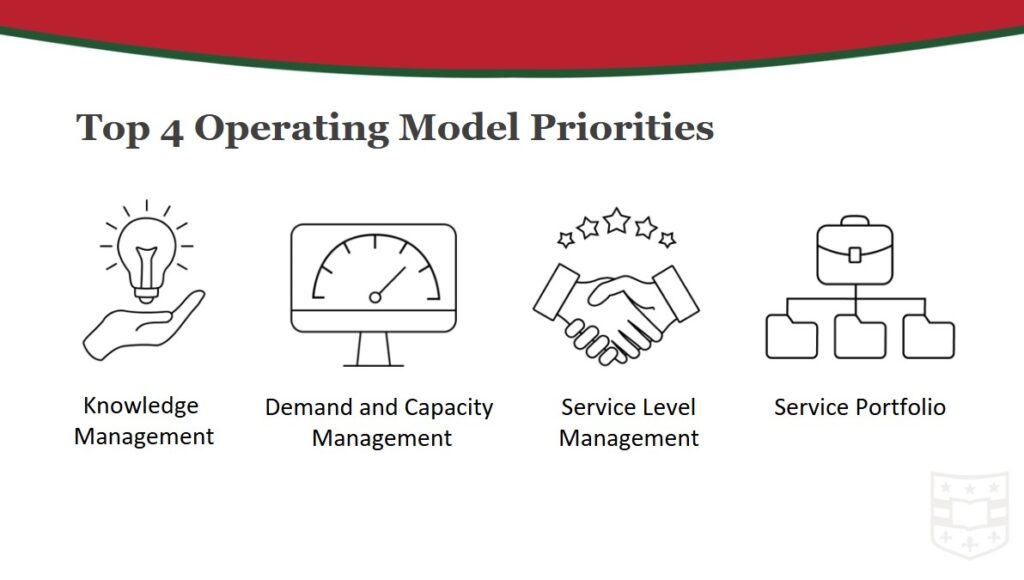
As WashU IT continues advancing the operating model, several key priorities are starting to show up in the way teams plan work, share information and support the university. These changes are meant to make daily work easier to understand and more consistent, whether employees are creating knowledge articles, managing incoming requests, tracking project work or helping customers know what to expect.
Knowledge Management
Knowledge Management is about making it easier for staff and customers to find the right information at the right time. Phase One went live August 24 by introducing a standardized process for creating, reviewing and maintaining knowledge across IT. So far, nearly 100 staff members have participated in training on the new process.
Employees who missed the training can access the full recording, along with learning resources for creating knowledge articles, on the Knowledge Management Teams space. For teams, this means less time recreating answers, fewer one-off instructions, and more confidence that staff and customers are using the same source of truth. Phase Two will introduce additional capabilities, including product pages and other enhancements to the overall knowledge experience.
Demand and Capacity Management
Beginning Oct. 4, WashU IT will move from Planview PPM Pro to ServiceNow Strategic Portfolio Management (SPM). This change will give teams a more consistent way to see incoming work, understand available capacity and make decisions about what should be prioritized.
Employees will continue logging time in Planview through Oct. 3 and should begin using SPM starting Oct. 4.
All team members are required to complete training in Workday Learning by Oct. 2. Employees should also attend one of the live virtual sessions based on their selected date, though they may attend any available session if another date works better. The goal is to help everyone feel prepared before the transition and understand how the change affects their day-to-day work.
Service Portfolio and Service Level Management
The Operating Model Team is nearing completion of the Service Portfolio project. This work helps define IT services in a clearer and more consistent way, so employees have a better understanding of what each service includes, who owns it and how it supports the university.
The next phase focuses on service offerings and service level management. For employees, this means clearer expectations around how services are delivered, what customers can expect and where teams should focus when questions or issues come up. Over time, this should make service delivery easier to explain, support and improve.
Why it matters
The operating model is intended to help employees spend less time navigating unclear processes and more time focusing on meaningful work. By creating more consistent ways to manage knowledge, prioritize demand and define services, WashU IT can reduce confusion, improve collaboration and make workloads easier to manage.
For teams across WashU IT, the model should make it easier to answer common questions: What work is coming in? What has the highest priority? Who owns this service? What information should customers and staff use? Answering those questions more consistently helps strengthen the customer experience and better align IT work with university priorities.
Learn more
Employees and distributed IT partners are encouraged to review the linked resources, complete required training and stay engaged as these priorities continue to mature. Each step helps build a more consistent, easier-to-navigate experience for the people who deliver and rely on WashU IT services.